
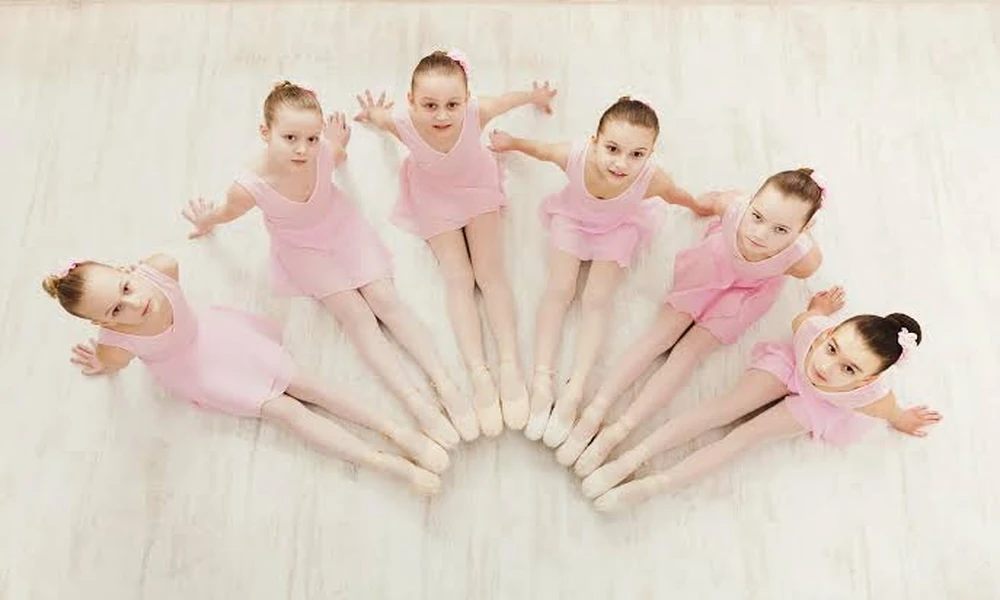
Dance is not just a series of body movements. It is an involuntary reaction to sound that occurs on the visual level. Music and movement influence each other and this helps dancers to interpret timing and rhythm. In each piece of music there is some pulse which can be used as a beat to time the steps and body movements. Dancers become aware of this pulse and internalize and employ this pulse to create controlled movement. Studies on music and movement capability indicate that there is a strong relationship between rhythm and tempo of music and human body coordination. Now musicality is in fact, then, a/c becomes a necessary part of the dancers’ development as they will no longer be able to follow only counts.
Recognize the Beat & Basic Rhythm (ZYG).
Many dance movements are subdued to the beat. Counts are not only used to locate where a movement is to start or finish in dancers. Having a steady beat simplifies coordinating steps with music and will help maintain consistency throughout a routine. Rhythm can be added to raise the level of “pulse” further, as it forms a pattern inside the pulse.
The dancer can respond to the strong beat by making one quick movement or by making a number of smaller movements between beats. As additional research has shown, dance learning and memory can also be enhanced by using rhythmic accompaniment. This is one of the reasons why a lot of dancers generally perform routines with simple rhythmic patterns before incorporating more advanced music components.
Phrasing provides much of the structure to Dance
Musical phrasing teaches dancers about how each movement relates to the remainder of the music. There may be a beginning, a going forth and a reaching the end. Dancers can reflect the same by altering their type and amount of energy and movement quality during the phrase. Movement may not necessarily happen on all beats of the movement. Achieving this often by being in a place or delaying the action makes a deeper bond to the music. The relationship between music and dance can be investigated in terms of concepts like tempo and meter for research. It’s important to know how to phrase so choreography doesn’t feel mechanical.
Lithuanian Grammar through music awareness for children
Lively rhythms are developed through musical listening and physical activity. Dancers should listen for the rhythm as well as be aware of the tempo and the rhythm change. They need to be aware of the timing in which they want to highlight certain movements and when they want to include a quiet section in the music that they are playing that will make a difference to their interpretation. Some recent studies on ballet have explored more the relationship of the various parts of the body to beats and offbeats.
This indicates that the timing of music can be perceived from careful physical coordination. At the end of the day, it is all about awareness and control for music and dance. Dancers who have grasped the development of sound over time will be able to convey this structure using the movement. The outcome is a dance performance in which rhythm is not learned but it is part of the dance.